
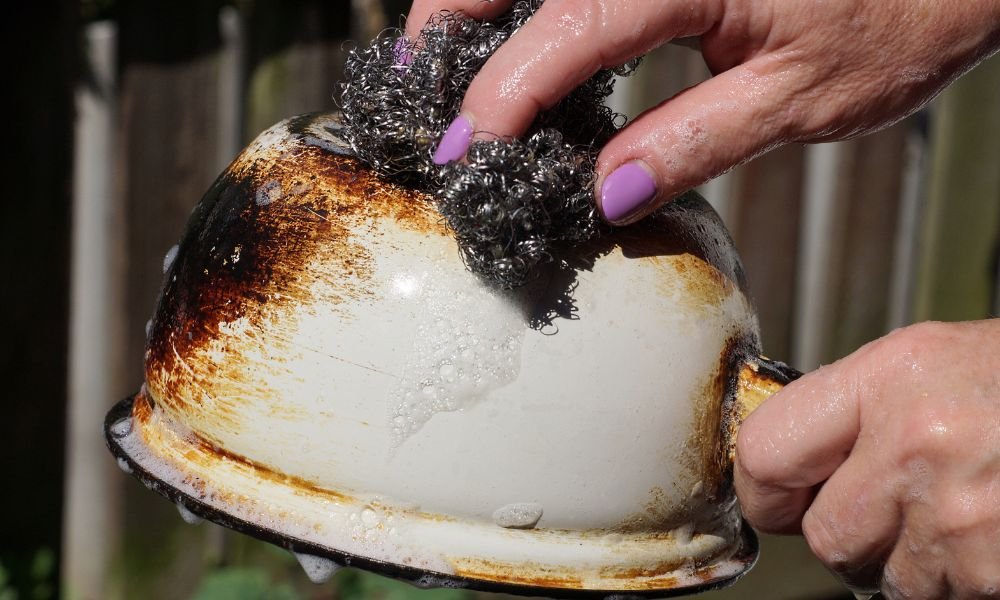
How to clean a burnt saucepan is easier than you might think. Burnt food can leave stubborn stains. The right cleaning method removes them safely. This guide explains simple steps using common household items.
A pristine kitchen can quickly turn chaotic after a moment of inattention. Suddenly, a delicious meal becomes a charred, encrusted mess. The sight of a blackened vessel can induce immediate despair. However, understanding the intricacies of restoration can resurrect even the most seemingly terminal cookware.
What happens when a saucepan gets burnt?
When thermal thresholds are breached, a destructive process known as pyrolysis occurs. During intense heat, organic matter chemically decomposes. As a result, proteins, carbohydrates, and lipids fuse tightly to the saucepan’s surface. As moisture evaporates, the remaining carbonaceous matter polymerizes, creating a stubborn, hydrophobic crust that defies standard mechanical washing. The once-smooth metallic or coated surface becomes heavily occluded by this resilient, carbonized matrix.
Why learning how to clean a burnt saucepan can save time and money
Banish the premature impulse to discard premium cookware. Learning how to clean a burnt saucepan prevents unnecessary replacements and protects valuable cookware. Instead of aggressive scrubbing, use targeted chemical and thermal methods. These techniques dissolve carbon bonds with less effort and better results. Efficiency in the kitchen relies on exploiting these smart chemical interactions rather than relying solely on brute force.
What readers will learn in this guide
In this guide, this comprehensive manual provides an exhaustive breakdown of restorative protocols tailored to various materials and burn intensities. Additionally, readers will learn the science behind common household cleaners. They will also master effective cleaning methods and discover how to clean a burnt saucepan without damaging its appearance or durability.
Why Saucepans Get Burnt in the First Place
Preventing thermal degradation requires an understanding of the dynamic variables at play during heat transfer. Domestic culinary mishaps are rarely accidental; they are usually the direct result of predictable thermodynamic oversights.
Common cooking mistakes that cause burnt pans
The main cause of burnt cookware is excessive heat from leaving a dry pan unattended. Additionally, thick sauces and dairy mixtures burn easily without regular stirring. As a result, food sticks to the surface and quickly scorches. Once this localized zone dehydrates, scorching is instantaneous. Furthermore, utilizing mismatched burner sizes concentrates caloric energy unevenly, generating volatile hot spots that overwhelm the pan’s conductive capacity.
How different foods leave different types of burnt residue
- Sugars and Carbohydrates: Undergo intense caramelization and subsequent carbonization, forming a glassy, brittle lacquer that adheres tenaciously to metallic pores.
- Proteins: Maillard reactions progress into advanced cross-linking, producing a dull, leathery, and highly resilient coating that resists simple water dissolution.
- Fats and Oils: Reach their smoke points and polymerize into a sticky, amber-colored resin similar to commercial varnish, which requires targeted alkaline intervention to saponify and lift.
Preventing future burn marks while cooking
Mitigating future culinary conflagrations relies on proactive temperature regulation. Utilizing heavy-gauge cookware featuring aluminum or copper cores ensures uniform heat distribution, effectively eliminating dangerous localized hot spots. Consistently introducing a pan-coating lipid barrier can significantly reduce direct protein-to-metal bonding. Additionally, using low-and-slow simmering techniques paired with frequent, sweeping agitation using a silicone spatula prevents the formation of stagnant, high-risk boundary layers.
Identify Your Saucepan Material Before Cleaning
Before deploying any remedial agents, one must ascertain the exact metallurgical or chemical composition of the vessel. Applying an incorrect reagent to a vulnerable surface can cause irreversible corrosion or surface degradation.
Stainless steel saucepans
Characterized by its resilient chromium-nickel alloy matrix, stainless steel exhibits exceptional resistance to corrosion and mechanical wear. This robust nature allows it to withstand both acidic and alkaline cleaning interventions without losing its structural integrity. However, it remains vulnerable to pitting corrosion if exposed to concentrated, prolonged salt solutions or halogenated bleaching agents. While it tolerates aggressive scrubbing better than most materials, maintaining its brushed or mirrored finish requires cautious abrasive selection.
Non-stick saucepans
Typically coated with polytetrafluoroethylene (PTFE) or advanced ceramic formulations, non-stick vessels demand ultra-gentle care. The low surface energy that prevents food adhesion also makes these coatings highly susceptible to micro-scratching and delamination. Mechanical abrasion must be completely avoided, as deep scratches compromise food-release properties and can expose the underlying aluminum substrate to acidic foods. Cleaning efforts here must rely strictly on chemical dissolution rather than friction.
Cast iron saucepans
Unlike other cookware, uncoated cast iron relies on a polymerized oil layer called seasoning. This layer keeps the surface non-stick and rust-resistant. However, harsh detergents and prolonged exposure to acidic solutions can strip away this protection. As a result, the porous iron becomes vulnerable to oxidation. Therefore, restore a scorched cast iron pan with dry-scrubbing or targeted thermal techniques. These methods preserve the essential carbonized oil layer.
Copper saucepans
Prized for its peerless thermal conductivity, copper is a highly reactive metal that requires delicate handling. However, aggressive chemicals can tarnish copper or damage its protective lining. This lining is usually made of tin or stainless steel. Because tin melts easily and scratches quickly, use non-abrasive cleaners. Instead, apply pH-neutral or mildly acidic solutions with a soft cloth.
Enamel-coated cookware
Enamel cookware features a smooth layer of vitreous porcelain glass fused onto a cast iron or steel core. While highly resistant to chemical reactions, this glassy surface is fragile and prone to chipping from mechanical impact or thermal shock. Abrupt temperature shifts can cause the metal and glass to expand at different rates, resulting in micro-fractures. Consequently, cleaning protocols must avoid coarse abrasives and rapid cooling cycles.
Why the cleaning method matters
Selecting an incorrect cleaning method can ruin high-end cookware. For example, vinegar can quickly rust an unseasoned iron pan. Likewise, baking soda may oxidize and discolor raw aluminum. Therefore, always match the cleaner to your pan’s material. This approach restores the surface without causing structural damage.
Essential Supplies for How to Clean a Burnt Saucepan
Successfully reviving damaged cookware relies on assembling a curated toolkit of safe household ingredients and gentle cleaning tools.
Everyday household ingredients
- Sodium Bicarbonate (Baking Soda): A mild amphoteric buffer providing gentle mechanical abrasion and alkaline grease-cutting power.
- Acetic Acid (White Vinegar): A mild organic acid that effectively dissolves mineral deposits and breaks down caramelized carbon matrices.
- Sodium Chloride (Kosher Salt): Coarse, crystalline granules that provide excellent, non-destructive mechanical friction.
- Fresh Lemons: Source of citric acid, offering natural chelating properties alongside a pleasant, refreshing aroma.
Safe cleaning tools
Employ non-marring tools such as cellular cellulose sponges, non-scratch polyurethane scrubbing pads, and stiff-bristled nylon dish brushes. Wooden scrapers or silicone spatulas are excellent for dislodging loosened, gelatinous carbon deposits without scratching the metal underneath. For ultra-delicate surfaces, microfiber cloths provide enough friction when paired with the right chemical cleaners.
What to avoid using
First, banish steel wool, brass-wire brushes, and coarse pumice powders from your cleaning routine. These abrasives damage non-stick coatings and scratch polished stainless steel. They also ruin delicate enamel surfaces. In addition, avoid concentrated household bleach and caustic oven cleaners. Otherwise, they can cause severe steel pitting and strip anodized aluminum coatings.
Eco-friendly cleaning options
Choosing biodegradable, plant-derived cleaning agents and common household staples reduces environmental chemical runoff. Additionally, combining vinegar, baking soda, and citrus extracts creates an effective cleaning routine. As a result, this approach reduces indoor air pollution and lowers the risk of skin irritation from petroleum-based solvents.
How to Clean a Burnt Saucepan with Hot Water and Dish Soap
For minor culinary mishaps, a basic surfactant soak is often all that is needed to loosen superficial carbon deposits.
When this simple method works best
This foundational method shines when dealing with fresh, lightly caramelized residues that have not yet fully polymerized into a dense crust. It is especially useful for delicate non-stick coatings and vitreous enamel surfaces that cannot tolerate acidic or alkaline treatments.
Step-by-step soaking process
1.Cool the vessel:Allow to reach room temperature.
Never plunge a hot pan into cold water, as thermal shock can warp the metal base or crack fragile enamel coatings.
2.Apply detergent:Introduce concentrated liquid soap.
Dispense a generous tablespoon of high-surfactant dish soap directly onto the center of the burnt residue.
3.Add boiling water:Submerge the affected zone.
Pour boiling water into the pan until the water level stands at least two inches above the burnt debris line.
4.Extended maceration:Soak for 60 to 120 minutes.
Allow the liquid to rest as the soap molecules lower water tension, allowing moisture to penetrate the hardened carbon shell.
Tips for removing loose burnt residue
After a thorough soak, use a flexible silicone or wooden spatula to gently scrape the softened residue. Work in concentric circles, lifting the loosened debris away from the edges. Avoid pressing down with excessive force; if the residue remains stuck, transition to a stronger chemical treatment rather than scrubbing harder.
How to Clean a Burnt Saucepan with Baking Soda
Sodium bicarbonate’s mild alkalinity and fine crystal structure make it an exceptional tool for tackling stubborn, dried-on carbon deposits.
Why baking soda is so effective
As a mild base, baking soda breaks down acidic organic compounds, such as fats and proteins, through a mild saponification process. Its fine crystals offer excellent scrubbing action without being hard enough to scratch stainless steel or enamel. This balance allows it to lift tough grime while keeping the underlying surface safe.
Baking soda paste method
For localized, stubborn stains on the interior walls of your pan, mix three parts baking soda with one part lukewarm water to create a thick, paintable paste. Spread this mixture evenly over the charred areas and let it sit for up to four hours. As the paste dries, it draws out and loosens the carbon matrix, making it easy to wipe away with a damp sponge.
Boiling baking soda solution
When dealing with a completely blackened pan bottom, fill the vessel with water and stir in half a cup of baking soda. Bring the mixture to a steady boil over medium heat, letting it simmer for fifteen to twenty minutes. The combination of heat and alkaline water triggers a bubbling action that lifts large flakes of burnt food, causing them to float effortlessly to the surface.
Best situations for this method
This method works well for stainless steel, cast iron, and enameled cookware with stubborn burnt residues. However, avoid using it on raw, un-anodized aluminum. Otherwise, it can cause oxidation and leave the metal dull gray.
How to Clean a Burnt Saucepan with Vinegar
When dealing with resilient, protein-heavy burns that resist alkaline cleaners, white distilled vinegar provides excellent acidic cleaning power.
The science behind vinegar’s cleaning power
Household white vinegar contains about 5% acetic acid, which easily penetrates tough protein lattices and caramelized sugars. The acid breaks down the chemical bonds holding the burnt food to the pan’s surface, softening the residue. It also works as a natural chelating agent, dissolving mineral scale and restoring brightness to dull stainless steel surfaces.
Boiling vinegar safely
Fill the burnt pan with a 1:1 mixture of white vinegar and water, ensuring all charred areas are fully submerged. Bring the solution to a gentle simmer over medium heat under a stove exhaust fan, as the evaporating acetic acid releases a strong, pungent vapor. Let it simmer for ten minutes; the heat accelerates the acid’s ability to break down tough carbon deposits.
Combining vinegar with baking soda
For extremely stubborn stains, combine these two household favorites for an extra cleaning boost. After boiling your vinegar solution, remove the pan from the stove and stir in two tablespoons of baking soda. This triggers an immediate, fizzy reaction:
$$\text{CH}_3\text{COOH} + \text{NaHCO}_3 \rightarrow \text{CH}_3\text{COONa} + \text{H}_2\text{O} + \text{CO}_2 \uparrow$$
The rapid release of carbon dioxide gas ($\text{CO}_2$) creates a dynamic lifting action that helps break apart the hardened crust from the inside out.
Common mistakes to avoid
Never add baking soda to boiling, concentrated vinegar, as the sudden foaming can cause hot liquid to spill over the sides of your pan. Always take the pan off the heat source before mixing the two ingredients. Additionally, avoid using acidic vinegar soaks on unseasoned cast iron or carbon steel pans for more than a few minutes, as extended exposure can corrode the metal.
How to Clean a Burnt Saucepan with Lemon
For those seeking a completely natural, pleasant-smelling alternative to vinegar, fresh lemons offer great cleaning performance.
Natural cleaning benefits of lemon
Lemons contain high levels of citric acid, a natural organic acid that works exceptionally well at breaking down scorched sugars and fats. It acts as an effective chelating agent, binding to metal ions and loosening the grip of burnt food on the pan. As an added benefit, it avoids the harsh, pungent aroma associated with vinegar.
Lemon and hot water technique
Slice two large lemons into thick rounds and arrange them across the bottom of the burnt pan. Add enough water to submerge the slices completely, then bring the liquid to a vigorous boil. Let it bubble for fifteen minutes; you will notice the lemon pieces turning dark as they absorb the loosened carbon particles. Once cooled, dump the liquid and easily wipe away the remaining residue with a soft sponge.
Freshening odors while removing stains
Beyond lifting tough stains, the natural essential oils (primarily limonene) found in lemon rinds neutralize the acrid, smoky odors left behind by burnt food. This process eliminates stubborn smells from your cookware while filling your kitchen with a bright, clean citrus fragrance.
How to Clean a Burnt Saucepan with Salt
When you need safe, effective scrubbing power without harsh chemicals, coarse salt serves as an excellent natural abrasive.
When salt works well
Coarse salt works well on seasoned cast iron, carbon steel, and thick stainless steel pans. Its coarse crystals remove greasy residue and hardened crusts. At the same time, they protect seasoning layers and avoid scratching durable metal surfaces.
Salt scrubbing technique
Pour off any standing liquid from the pan, leaving the burnt crust slightly damp. Sprinkle a thick layer of coarse kosher or sea salt over the area, then use a clean, dry cloth or a folded paper towel to scrub firmly in circular motions. The salt crystals will mix with the loosened carbon, turning into a dark, gritty paste that can be easily rinsed away with warm water.
Safe scrubbing tips for delicate cookware
Do not use dry salt scrubs on delicate non-stick coatings or polished copper finishes, as the sharp edges of the crystals can leave fine scratches. If you need to clean these surfaces, dissolve the salt into warm water first to harness its chemical properties rather than relying on its abrasive texture.
How to Clean a Burnt Saucepan with Dishwasher Tablets
The concentrated cleaning agents packed into standard automatic dishwasher tablets make them surprisingly effective at removing stubborn, burnt-on food residues.
Can dishwasher tablets remove burnt stains?
Yes, they work wonderfully. Dishwasher tablets are formulated with a potent blend of enzymes that break down proteins and starches, alongside alkaline builders that saponify stubborn fats. They also contain specialized bleaching agents designed to lift dark stains, making short work of heavily carbonized residues that defy standard dish soaps.
Proper way to use them
Gently run warm water over a compressed powder dishwasher tablet, then rub the flat face of the tablet directly across the burnt surface of the pan. The tablet acts as a gentle, eroding scrubber that dissolves as you work, releasing a highly concentrated cleaning paste over the stubborn stains. Alternatively, place a tablet in the pan, fill it with hot water, and let it soak overnight to loosen tough grime.
Safety precautions to remember
Because dishwasher tablets are highly alkaline, always wear protective dishwashing gloves to prevent skin irritation during use. Avoid using this method on raw aluminum cookware, as the concentrated alkaline ingredients can cause immediate etching and surface discoloration.
How to Clean a Burnt Saucepan with Commercial Cleaners
When natural remedies are not enough to lift extreme carbon buildup, specialized commercial cleaners provide professional-strength restoration.
Choosing the right cleaner
Look for commercial products containing oxalic acid, a powerful organic acid that excels at removing stubborn scorch marks, heat tints, and mineral scale from stainless steel. For heavy grease and caramelized sugars, alkaline paste cleaners or specialized cookware creams offer excellent cleaning power without the harsh, caustic properties of standard oven sprays.
Following manufacturer instructions
Always read and follow the application guidelines printed on the product label. Apply the cleaner evenly across the stained areas using a damp sponge, and limit the contact time to what the manufacturer recommends—usually less than two minutes for concentrated formulas. Leaving these potent cleaners on a surface for too long can lead to unwanted dulling or chemical etching.
Protecting cookware finishes
After using a commercial cleaner, rinse the pan thoroughly with plenty of warm water to remove any chemical residue. Wash it a second time with standard dish soap to ensure the surface is completely clean and safe for future cooking. To maintain your pan’s bright appearance, use a dry microfiber cloth to polish the exterior walls, wiping in the direction of the metal’s grain.
Cleaning Burnt Saucepans Based on Burn Severity
Adjusting your cleaning strategy to match the severity of the burn saves time and protects your cookware from unnecessary wear.
Light Burn Marks
These appear as pale amber or light brown discolorations, usually along the inner bottom edge of the pan where liquid has evaporated.
- Quick cleaning methods: A simple ten-minute soak in warm water paired with a high-surfactant dish soap will easily lift the stain.
- Minimal scrubbing techniques: Gently wipe the area with a non-scratch cellular sponge or a soft microfiber cloth; avoid using stiff brushes or abrasive powders for these light marks.
Moderate Burnt Residue
These show up as a dark brown or black layer of stuck-on food that resists regular dish soap but has not yet turned into a glassy crust.
- Deep soaking strategies: Fill the pan with a mix of water and vinegar, bring it to a boil for ten minutes, then allow it to cool completely before cleaning.
- Combining natural cleaners: After the pan cools down, sprinkle baking soda over the wet surface to create a fizzy paste, then scrub gently with a nylon brush.
Heavy Burnt-On Food
This is an extreme culinary mishap characterized by a thick, raised, and completely blackened carbon shell that covers the entire bottom of the vessel.
- Multi-step restoration process: Start by boiling a concentrated baking soda solution to crack the hardened outer crust, then scrape away the loosened pieces with a wooden tool. Follow up with a direct application of commercial cleaner or a thick baking soda paste to tackle the remaining base layer.
- When repeated treatments are necessary: Truly severe burns often require two or three rounds of soaking, boiling, and gentle scraping to fully lift the stubborn carbon matrix without damaging the underlying metal.
Cleaning Burnt Saucepans Without Damaging the Surface
The ultimate goal of restoring cookware is to remove the burnt food while keeping the underlying surface in perfect condition.
Avoiding scratches
Micro-scratches do more than just dull the appearance of your cookware; they create tiny, rough pockets where food can stick more easily in the future, making the pan increasingly prone to scorching. Always use cleaning motions that follow the natural grain of brushed metal, and avoid scrubbing in harsh cross-grain patterns.
Safe scrubbers to use
Stick to non-marring tools like multi-purpose polyurethane scrubbers, natural loofah pads, or specialized net-wrapped sponges. These tools provide enough friction to break apart softened carbon clusters without gouging the protective metal oxide layer beneath.
Protecting non-stick coatings
When cleaning a burnt non-stick pan, avoid any form of mechanical scrubbing. Rely entirely on chemical soaking methods, such as warm dish soap solutions or a gentle, diluted baking soda bath. Never use plastic scrapers or fingernails on a wet non-stick surface, as the heat-softened coating is highly vulnerable to tearing.
Preserving the saucepan’s finish
To maintain the bright luster of stainless steel or copper cookware, finish your cleaning routine by applying a dedicated metal polishing cream. Dry the pan immediately after rinsing to prevent mineral spots from hard water, and store your cookware away from sharp metal utensils that could scratch the interior surfaces.
Common Mistakes to Avoid When Learning How to Clean a Burnt Saucepan
When dealing with a ruined meal, it is easy to make hasty cleaning choices that end up causing permanent damage to your cookware.
Using metal scouring pads
Steel wool and brass mesh pads are too aggressive for standard cookware. They quickly shave away non-stick layers, cut deep scratches into polished stainless steel, and leave tiny iron particles behind that can lead to surface rust.
Mixing unsafe cleaning chemicals
Never combine household bleach with acidic cleaners like vinegar or commercial descalers, as this reaction releases dangerous, toxic chlorine gas. Stick to safe, well-documented combinations like vinegar and baking soda, and always work in a well-ventilated space.
Scrubbing too aggressively
Applying heavy physical force to a stubborn stain often leads to warped pan bottoms, scratched surfaces, and worn-out cleaning tools. Let your chemical soaking treatments do the heavy lifting; if a stain does not budge, it needs more time to soak, not harder scrubbing.
Ignoring manufacturer care instructions
Every brand of premium cookware has specific care guidelines based on its exact materials. Ignoring these rules—such as putting an anodized aluminum pan in the dishwasher or using acids on unseasoned cast iron—can instantly void your warranty and ruin your kitchen investments.
Natural vs Commercial Cleaning Methods
Both natural household ingredients and specialized commercial products have their proper place in a well-maintained kitchen.
Benefits of natural cleaners
Natural options are non-toxic, highly affordable, and readily available in almost every home pantry. They dissolve tough carbon deposits without releasing harsh chemical fumes into your living space, making them a safe choice for homes with children, pets, or family members with respiratory sensitivities.
Advantages of commercial products
Commercial formulations offer fast, professional-grade cleaning performance that saves time. They use targeted organic acids and specialized surfactants to dissolve extreme, polymerized grease and deep scorch marks in a fraction of the time required by traditional soaking methods.
Which method works best for different situations
For everyday maintenance and moderate cooking stains, natural options like vinegar and baking soda are usually the best choice. However, when dealing with extreme, multi-layered carbon buildup or restoring vintage cookware found at an estate sale, commercial cleaners provide the specialized strength needed to get the job done.
How to Remove Burnt Smells from a Saucepan
A thoroughly cleaned pan can sometimes retain a stubborn, smoky odor that risks altering the flavor of future meals.
Neutralizing stubborn odors
When food burns, it releases volatile organic compounds that settle into the microscopic pores of the metal or coating. Simply washing the surface will not remove these trapped particles; you need a dedicated deodorizing step to neutralize them completely.
Natural deodorizing methods
Fill the clean pan with water, add half a cup of baking soda and the juice of a fresh lemon, and bring the mixture to a simmer for fifteen minutes. The baking soda works to absorb airborne odors, while the boiling citric acid breaks down remaining scent molecules, leaving the pan clean and neutral.
Keeping cookware smelling fresh
Store your clean saucepans in a dry, well-ventilated cabinet with their lids off to allow fresh air to circulate. For cast iron or carbon steel pieces, applying a thin layer of fresh, neutral cooking oil after cleaning seals the pores, keeping unwanted odors out and protecting the metal from rust.
Tips to Prevent a Burnt Saucepan in the Future
The easiest way to deal with a burnt pan is to prevent the scorching from happening in the first place by building smart cooking habits.
- Monitor cooking temperatures: Avoid using high heat settings for long periods; instead, bring the pan up to temperature on medium heat and adjust as needed.
- Use enough cooking liquid: Ensure there is always a sufficient layer of water, stock, or cooking oil to protect food from sticking directly to the hot metal.
- Stir foods regularly: Keep thick or starchy mixtures moving across the bottom of the pan with a heat-safe spatula to eliminate hot spots.
- Choose the right cookware: Use heavy, multi-clad pans for slow-simmered sauces, and save thin lightweight pans for quick boiling tasks.
- Clean pans immediately: Wash your cookware as soon as it cools down to prevent light cooking residues from drying out and baking onto the surface during its next use.
Frequently Asked Questions About How to Clean a Burnt Saucepan
Can a badly burnt saucepan be saved?
Yes, almost any high-quality stainless steel, cast iron, or enameled pan can be successfully restored using targeted soaking and boiling methods, provided the metal base has not warped or cracked from thermal shock.
Is baking soda safe for every saucepan?
Baking soda is safe for stainless steel, enamel, copper, and cast iron. However, avoid using it on raw, un-anodized aluminum surfaces, as its alkaline nature can cause oxidation, leading to gray stains and pitting.
Will vinegar damage cookware?
Vinegar is safe for stainless steel, copper, and enamel when used for short soaks or boiling steps. Avoid leaving acidic vinegar solutions in unseasoned cast iron or carbon steel pans for extended periods, as the acid can corrode the metal.
Can bleach be used on a burnt saucepan?
Do not use household bleach on cookware. It can cause severe pitting corrosion on stainless steel and ruin non-stick surfaces, and mixing it with other kitchen cleaners can release dangerous, toxic gases.
How long should a burnt saucepan soak?
For minor stains, a simple one-to-two-hour soak is usually enough. For deep, heavy carbon buildup, let the pan sit overnight in a baking soda or dish soap solution to completely soften the crust before cleaning.
What is the fastest way to clean a burnt saucepan?
The quickest approach is to fill the pan with a mixture of vinegar and water, bring it to a boil on the stove, and then stir in baking soda. The heat and fizzing action work together to lift and loosen stubborn carbon deposits within minutes.
Final Thoughts
Dealing with a severely burnt pan can be incredibly frustrating, but it rarely means the end of your cookware’s useful life. By understanding the material properties of your pan and choosing the right household ingredients, you can easily break down tough carbon bonds and restore your kitchen tools to their original shine. Always start with the gentlest methods first, like a simple warm water and dish soap soak, before moving on to stronger treatments if needed. Building clean cooking habits and taking care of your pans right after use ensures your kitchen investments stay beautiful, reliable, and ready for your next culinary adventure for years to come.
Related Guides: